
“This IS a female House Finch, yes? I'm always getting them confused.... ;-)” That reader's question captures the feeling: a bird looks familiar, but its name still feels uncertain. The comment appeared in our reader community on October 28, 2026..
In a review of the 180 days preceding November 16, 2026, identification help accounted for about 400 questions, the largest topic among the community's screened human questions. Questions like the one above come up repeatedly: a familiar-looking bird can still leave its observer unsure. The six pairs below offer practical comparisons, not a statistical ranking of the most confusing birds..
The approach here is simple: compare a few specific features, then consider place and season. There is no need to force a name when the useful detail is hidden.
Carolina Chickadee or Black-capped Chickadee? Listen, but leave room for doubt
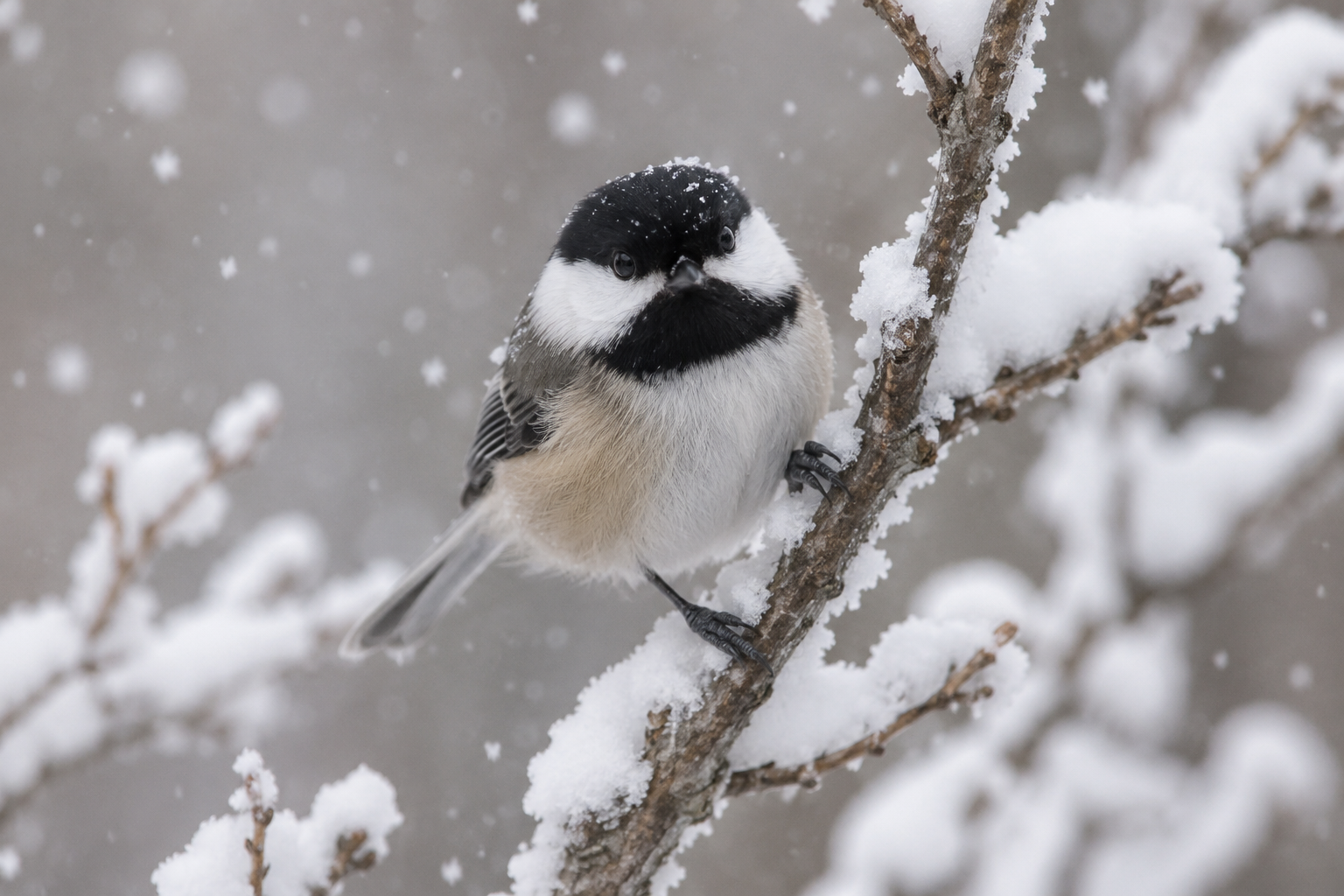
Both have the familiar black cap and pale cheeks. Audubon describes the Carolina as generally smaller, with a neater black throat patch and less white along the wing feathers. These are subtle differences; a photograph that hides the wing is a reason to stay cautious. Audubon: Carolina Chickadee.
Location helps: Carolina is the southeastern counterpart of Black-capped. Its chickadee call is generally quicker and higher, and its whistled song usually has four notes rather than two or three. But where their ranges meet, the birds can interbreed and imitate one another's songs. Sound is useful evidence, not a guarantee in that contact zone. Audubon: Carolina Chickadee.
Eastern Bluebird or Western Bluebird? Start under the bill
Blue above and rusty below describes both adult males, so the throat deserves a closer look. A male Eastern has reddish brown on the throat and chest, blue upperparts, and a white belly. A male Western has a blue throat, gray belly, and sometimes reddish brown in the middle of its back. That back patch is helpful when present, but “sometimes” matters. Audubon: Eastern Bluebird, Western Bluebird.
Their names provide a broad geographic clue, not a dividing line that settles every sighting. Audubon's regional listings include both in parts of the Southwest and Texas; a local range map is more useful than the name alone. Females are duller, and female Westerns have gray throats, so the male's bright blue throat is not a requirement for every Western Bluebird. Audubon: Eastern Bluebird, Western Bluebird.
Ruby-throated Hummingbird or Anna's Hummingbird? Check the crown and the calendar
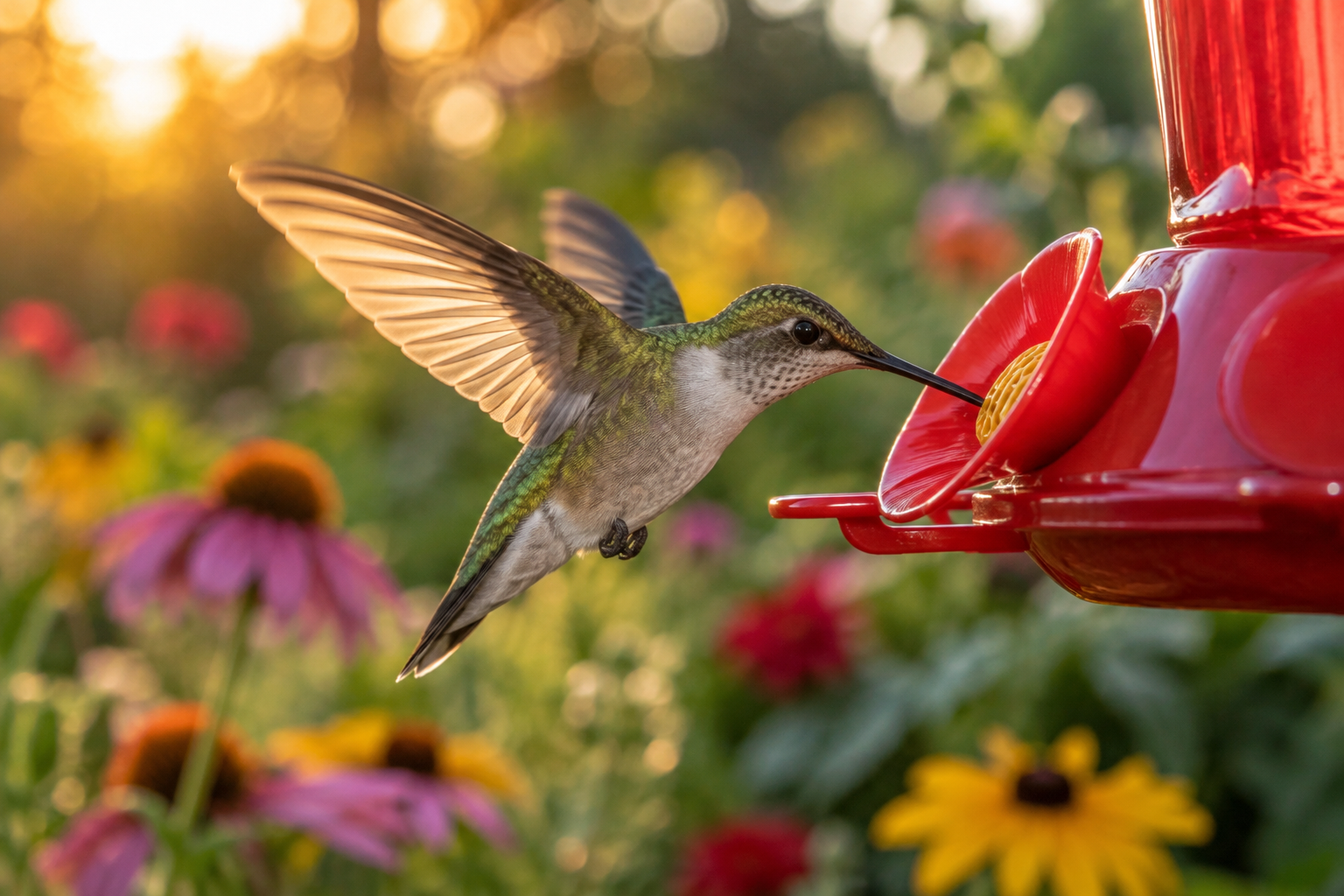
For an adult male, the useful question is where the red appears. Ruby-throated has a ruby-colored throat and green upperparts. Anna's has rose-red color on both the throat and crown. Light can conceal that distinction: Audubon notes that Ruby-throated's throat often looks black, while Anna's colored feathers can look black or gold. A dark-looking throat alone does not settle the name. Audubon: Ruby-throated Hummingbird, Anna's Hummingbird.
Ruby-throated is the familiar eastern breeding species, with most migrating south to Mexico and Central America for winter. Anna's is resident along the Pacific Coast, including through winter in many places. These are broad expectations, not proof from a date alone. Females do not carry the adult male's full color pattern: female Ruby-throated has a pale throat; female Anna's often has red throat spots. Audubon: Ruby-throated Hummingbird, Anna's Hummingbird.
House Finch or Purple Finch? Compare the face, not just the red
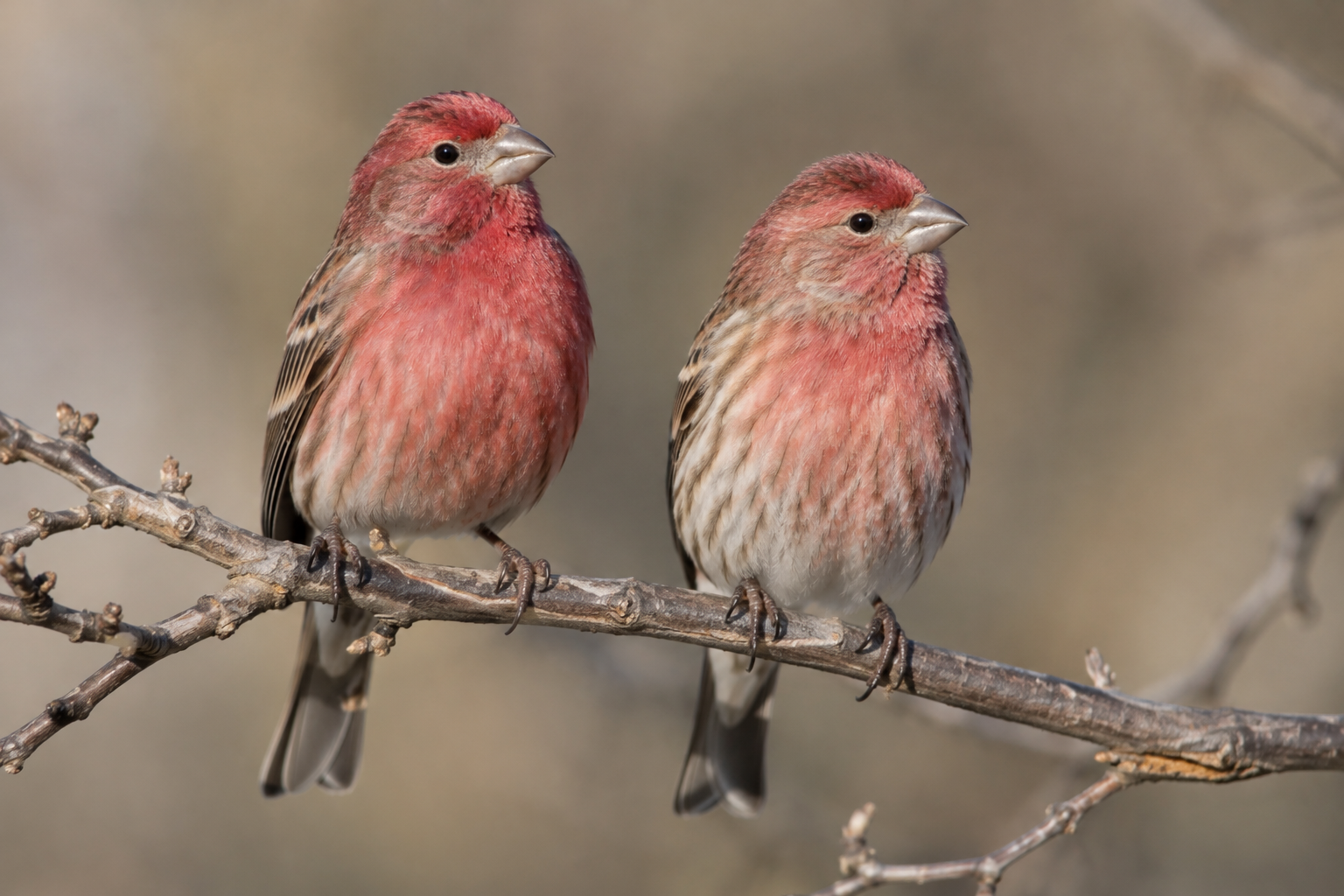
For males, think about the spread of color. House Finch has red on the forehead, eyebrow, throat, and chest, with brown on the crown and dark streaks along the sides. Purple Finch has a more even rosy wash across the head and front, without the obvious dark side streaks. “Purple” need not mean violet: Audubon describes the color as closer to old rose. Audubon: House Finch, Purple Finch.
For the female in our reader's question, the face is a better starting point than red feathers. Female House Finch has a relatively plain brown face. Female Purple Finch has a stronger pattern, including a pale eyebrow and dark whisker-like stripe. Place adds context: House Finch occurs coast to coast, while Purple Finch is notably scarce across much of the Rocky Mountains region. Audubon: House Finch, Purple Finch.
Downy Woodpecker or Hairy Woodpecker? Compare bill and head
These birds share strikingly similar black-and-white patterns. Hairy is larger, but the bill offers another comparison: it is nearly as long as the head. Downy's bill is conspicuously short and stubby. A side view that shows the whole bill is a useful starting point, especially when judging overall size feels uncertain. Audubon: Hairy Woodpecker, Downy Woodpecker.
Tail markings need care. Cornell's Project FeederWatch explains that Downy's dark bars on white outer tail feathers are easiest to see from below; from above, those feathers may look white. Hairy's outer tail feathers are all white in most of the eastern United States, but Pacific forms and birds in Newfoundland can have black bars. Black markings alone therefore do not identify a Downy. Cornell: Downy and Hairy comparison. Their rattling calls differ too: Downy's descends, while Hairy's stays on one pitch. A bill view, tail detail, and sound give you separate features to compare rather than one impression of size. Audubon: Downy Woodpecker, Hairy Woodpecker.
Mourning Dove or Eurasian Collared-Dove? Watch the neck and tail
For an adult collared-dove, the narrow black neck ring is a useful clue. Its pale brown body and broad white areas on the outer tail contrast with Mourning Dove's spotted wings and long, pointed tail. Audubon's guide lists the collared-dove's tail as rounded or square-tipped. The practical comparison is the whole neck-and-tail pattern, not simply a pale bird on the ground. Audubon: Eurasian Collared-Dove, Mourning Dove.
Both can fly directly, so flight style alone offers no clean separation. In flight, Mourning Dove's pointed tail shows white along its edges. Sound adds another clue: its low, mournful sequence differs from the collared-dove's repeated three-part call, with emphasis in the middle. Audubon: Mourning Dove, Eurasian Collared-Dove.
A useful identification question leaves room for “not sure”
A practical way to ask for help is to include the place, date, and a side-view photograph, then describe what you can actually see: bill length, throat color, wing markings, or tail shape. For an artificial-intelligence suggestion, use the same approach: compare two or three visible features with the linked guides before accepting the name. If the image does not show them, “not sure yet” is a perfectly reasonable answer. The goal is a name supported by observations, with room to change your mind.
You Might Also Like
A few favorites from the COOLFLY store for your backyard:


